
How to Identify Risks Across Your Entire Supply Chain

As supply chains grow more complex and geographically dispersed, companies can no longer afford to assess only their direct suppliers. Major risks—whether related to cybersecurity, corruption, or production continuity—can emerge much deeper in the chain. A single raw material supplier at tier 8 can jeopardize an entire production line. This is why expanding risk assessments to cover the full supply chain is increasingly critical.
Anticipating Risks Through TPRM
Third Party Risk Management (TPRM) solutions now make it possible to visualize and manage your entire third-party ecosystem, including your suppliers’ subcontractors. By integrating new technologies—such as artificial intelligence and media analysis—these tools help detect early warning signals that could impact operations.
One major advantage of these solutions is their ability to categorize third parties by role (direct suppliers, subcontractors, etc.) as well as by contract, product, or sector. This structured view is essential for clear visibility over your third-party environment.
How to Map Your Supply Chain
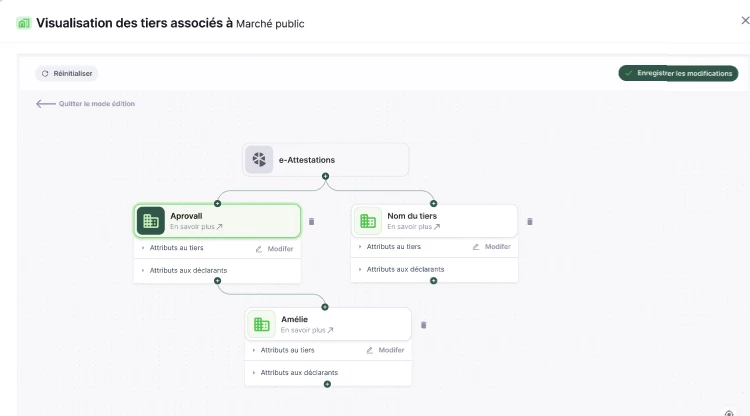
Supply chain mapping begins with a transparency and collaboration exercise with your direct suppliers: ask them to share the identities of their own key partners. This step can be supported by structured questionnaires, enriched with unique identifiers like the DUNS Number, to facilitate data matching and create a dynamic graphical representation of your chain.
The Aprovall360 solution takes it further: it helps establish links between actors in the chain to structure information and build tailored scenarios. These “Context” models are customizable and allow you to add specific attributes to each situation, accurately modeling interactions between third parties.
Supply Chain Discovery: A New Collaborative Approach
A rising trend is Supply Chain Discovery, which involves delegating part of the supply chain identification task to your suppliers themselves. By equipping them with simple, secure tools to map their own networks, you gradually gain a broad, structured view of your entire supply chain.
Valuable Visibility for Greater Resilience
Having a complete, documented, and structured view of your supplier ecosystem—both direct and indirect—makes you more responsive and confident. You can anticipate disruptions, respond to cyberattacks, or act swiftly on compliance incidents far more effectively than with a tier-1-only approach.
At the same time, supply chain traceability is strengthened. You can more easily track interactions between actors—even beyond tier 1—with better visibility over tier-2 suppliers and critical subcontractors. Managing subcontracting contexts becomes more intuitive, especially with solutions like Aprovall360, which naturally integrate context creation and tracking into your workflows.